
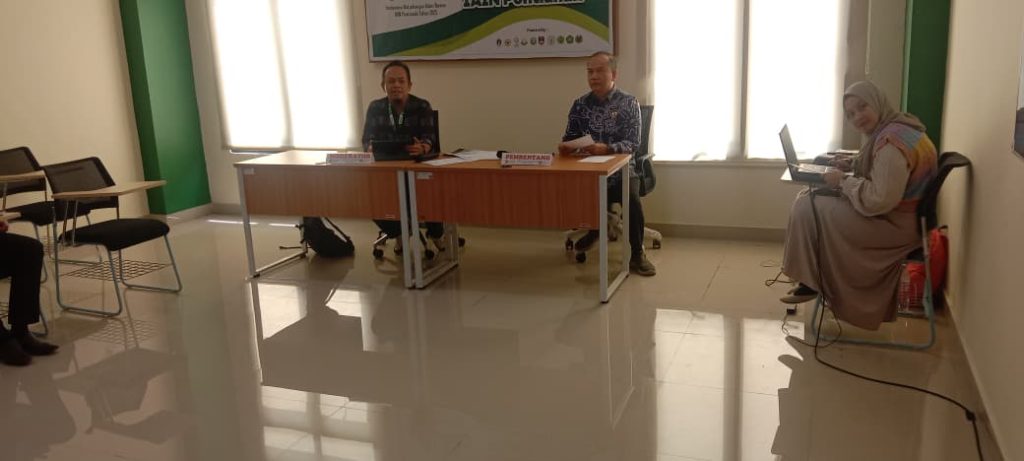
Pontianak, West Kalimantan — 9–11 September 2025
The 16th Konferensi Antar Bangsa Islam Borneo (KAIB) held in Pontianak, West Kalimantan, became a significant platform for interfaith and academic dialogue across the region. Among the distinguished presenters was Dr. Samsul Hidayat, M.A., Dean of the Faculty of Economics and Islamic Business at IAIN Pontianak, who delivered a paper addressing the urgent challenges of religious freedom and intercommunal relations in Indonesia.
In his presentation, titled “Public Advocacy and Interfaith Dialogue in the Dispute over Catholic Church Rejection in Kapur Village, Kubu Raya”, Dr. Hidayat highlighted the fragility of religious freedom guarantees at the grassroots level. Drawing from qualitative research, he explained how the rejection of a Catholic Church construction in Kapur Village reflects broader tensions in Indonesian society.
The paper underscored three crucial dimensions of conflict resolution:
- Government Response — Swift actions by local authorities demonstrated both legal and symbolic roles in curbing intolerance.
- Role of FKUB — The local Interfaith Communication Forum went beyond bureaucratic functions, becoming a mediator and trust-building actor.
- Public Advocacy — Civil society groups, youth organizations, and digital activism amplified calls for justice, framing the issue within human rights and constitutional guarantees
Dr. Hidayat argued that these three forces together formed a hybrid model of conflict resolution that blends legal enforcement, interfaith dialogue, and civic mobilization. Such integrative approaches, he noted, are essential for safeguarding religious freedom, strengthening democracy, and nurturing social cohesion in plural societies like Borneo.
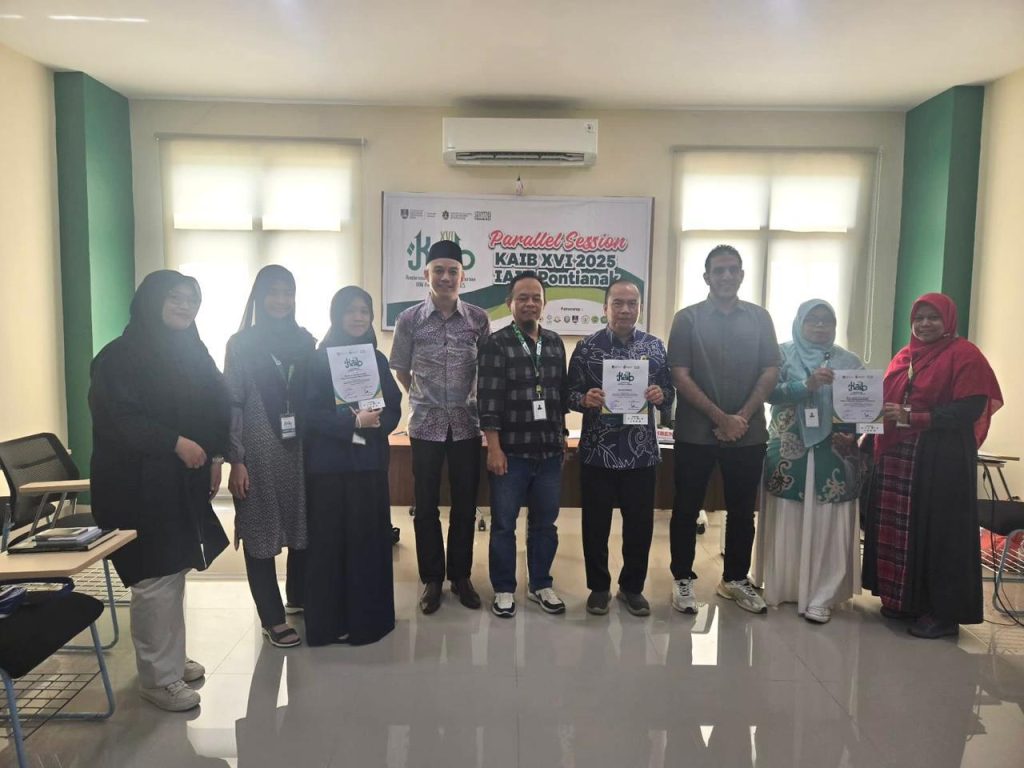
He emphasized that the findings are not only relevant for Kalimantan but also for Southeast Asia more broadly, where multicultural realities often generate tensions between rights, identities, and local politics. By situating his analysis within José Casanova’s theory of religion in the public sphere and Diana Eck’s pluralism framework, the paper offered both theoretical depth and practical implications.
The session was well received, with participants from Malaysia, Brunei, and Indonesia acknowledging the timeliness of the topic. Dr. Hidayat’s contribution reaffirmed Pontianak’s role as a hub for interfaith and academic engagement, while also calling for policy reorientation toward collaborative models of peacebuilding.
KAIB XVI closed with a strong message: that Borneo, as a region rich in cultural and religious diversity, must continue to advance scholarship and advocacy that promote tolerance, justice, and sustainable coexistence.